


Tattoo Styles & Recommendations
Anime and Cartoon Tattoos
Recommended artists: Serina, Leslie, Haley
Anime tattoos are a popular form of body art that feature characters and elements from anime series, films, and manga. They are often vibrant and intricate, and can depict beloved characters from popular anime series. Anime tattoos can also be illustrative, combining elements of realism with traditional tattooing techniques to create a drawn or animated feel.
Anime tattoos can have many meanings, including: Love for a series or character, Personal values, and Passion for Japanese pop culture.
Anime tattoos have evolved over the decades, and have gained worldwide popularity in recent years. This popularity can be attributed to several factors, including the global phenomenon of anime and its influence on popular culture.

Black & Grey
Recommended artists: Lonier, Tina, Justin
Uses different shades or dilutions of black ink to create a unique look. Black and grey tattoos can also be used to capture intricate details and expressions, such as the detailed fur and feathers of an animal, or the shading and detail in a portrait. For example, a black and grey portrait of a loved one can capture their likeness and convey their personality and character.
Black and grey tattoos are also known for their ability to look stunning on almost all skin types. The style can include elements like bold edges, classic outlines, smooth designs, shading, depth, and contrast.

Blackwork
Recommended artists: Lonier, Tina, Leslie, Haley
A style of tattoo that use solid black ink to create intricate designs, often covering large areas of the body. They can be simple or detailed, and can include geometric shapes, abstract patterns, figurative scenes, or ornate mandalas. Blackwork tattoos are sometimes called "dark art" tattoos and can be inspired by alchemy, esoterica, or other iconography. They can also incorporate shading techniques like dotwork. Blackwork tattoos can range in size from small pieces that accentuate certain body parts to larger pieces that cover entire limbs or even the body. They can be very visually pleasing and make a statement.

Fine line
Recommended artist: Tina, Leslie, Haley
Fine line tattoos are tattoos that use thin, precise lines to create delicate designs. They're often associated with minimalism and are known for their subtle elegance and simplicity. Fine line tattoos can be created in black and grey or color, and can range from small, like a flower on the wrist, to more elaborate, like a geometric pattern on the back.
Fine line tattoos are different from other types of tattoos because they use fewer needles, more precision, and focus more on design than shading. Artists often use a single needle or a combination of small needles to create the lines, and they need to have a steady hand to avoid making mistakes. Each stroke is deliberate and carefully thought out.

Floral
Recommended artist: All artists enjoy and tattoo floral
Floral tattoos are a popular tattoo style that can be aesthetically pleasing and versatile, and can have many different meanings.
They can be used to express personal beliefs, honor loved ones, or commemorate important life events.
The meaning of a flower tattoo can vary from person to person, and can be influenced by the flower, its color, and the wearer's culture.

Here are some examples of flower tattoos and their meanings:
Roses

A classic choice that can symbolize love, beauty, and passion. Different colors of roses can have different meanings, such as:
Red: Love, romance, and passion
White: Purity, innocence, humility, reverence, and new beginnings
Yellow: Friendship, joy, happiness, and new beginnings
Pink: Gratitude, appreciation, and sweetness
Orange: Enthusiasm, joy, energy, and excitement
Sunflower

Can symbolize happiness, growth, adoration, loyalty, and longevity. In Native American culture, sunflowers can also represent strength and fertility.
Orchid

Can have many different meanings depending on the culture, such as refinement, fertility, prosperity, strength, power, bravery, luxury, beauty, warrior's courage, and love.
Poppy

In Roman and Greek tradition, poppies are associated with death, but more generally, they can symbolize eternal sleep and peace. In modern times, poppy tattoos can also be used to remember people who have died in war.
Floral tattoos have evolved over time, adapting to different cultures and time periods. For example, in the 18th and 19th centuries, sailors often got floral tattoos to commemorate their travels, and in the 1960s and 1970s, floral tattoos became associated with the counterculture movement.
Illustrative
Recommended artist: Serina, Tina, Leslie, Justin, Haley
Illustrative tattoos are a broad tattoo style that can be recognized for their resemblance to illustrations in books, art galleries, or on paper. They can be whimsical and light-hearted, or complex and layered, and can range from realistic portrayals to abstract representations. Illustrative tattoos can use a variety of techniques, including:
-
Line-work,
-
Dot-work,
-
Blackwork,
-
Cross hatching
-
Stippling
-
Detailed shading
-
Vibrant color palettes.
Illustrative tattoos can be inspired by traditionalism and realism, and can adhere to few rules, allowing for a lot of creative freedom. They can be personal to the wearer and the artist, and can incorporate cultural elements to pay homage to heritage and connect with roots. Illustrative tattoos can also tell stories, so our artists listen to our clients' ideas and bring them to life.

Japanese
Recommended artist: Justin, Serina
Japanese tattoos, or irezumi, are a form of body art that can be used to convey meaning beyond just a cool design. The word irezumi literally means "inserting ink", and the style is known for its large size, detailed line work, and intense shading. Traditional Japanese tattoos, or wabori, are often decorated with mythical beasts, flowers, leaves, and other images from stories, myths, and tales.

Additional Japanese Tattoo Facts:
History
Tattoos in Japan have a long history, dating back to 720 A.D. when they were used as a form of punishment. Criminals were tattooed on the forehead to mark them as criminals, and people with tattoos were ostracized from their families and society. In the Edo period (1600–1868), tattoos began to develop into an art form inspired by woodblock prints and Chinese novels that depicted heroic characters with tattoos.
Technique
Traditionally, wabori tattoos were done by hand using needles attached to bamboo sticks, a method known as tebori which means "hand carved" or "engraved". Today, outlines are usually done by machine, which is called kikaibori, but the result can still be considered wabori.
Symbolism
Japanese tattoos can have a lot of symbolism with most imagery having deeper meanings than their appearance. Much of this can be inspired by Japanese folklore and storytelling.
Neo-traditional
Recommended artist: Serina, Leslie, Justin
Neo-traditional tattoos are a modern take on traditional American tattoo designs that combine classic elements with new-age art forms. They are known for their bold outlines, vivid colors, intricate details, and dramatic highlights. Neo-traditional tattoos often feature more intricate linework and shading than traditional tattoos, which can create a greater sense of realism and texture.
Neo-traditional tattoos draw inspiration from many cultures and traditions, including American, European, Japanese, and more. They may incorporate classic imagery such as swallows, ships, and pin-ups, but also include modern themes and motifs like technology, pop culture, and nature. For example, flowers like roses, lilies, and chrysanthemums are often used in neo-traditional tattoos to emphasize the beauty of nature. Animals such as wolves, bears, and birds may also be used to represent traits like strength, courage, and wisdom.

New School
Recommended artist: Serina, Tina, Leslie, Justin
New School is a contemporary tattoo style that originated in the 1970s and is influenced by traditional tattooing and caricatures.
New school tattoos are characterized by: Heavy outlines, Vibrant colors, Exaggerated depictions, Imaginative designs, Cartoon-like or surreal elements, Creative shading, and 3D effects.
New school tattoos often feature pop culture figures from cartoons, TV shows, or video games, but almost anything can be made into a new school tattoo. For example, artists might use inventive color palettes and outrageous interpretations to depict non-traditional animals like flamingos, crocodiles, or seahorses. The point isn't to achieve lifelike accuracy, but to go over the top with animal designs.
New school tattoos allow for greater artistic freedom and experimentation, leading to visually stunning and eye-catching tattoos.

Pop Culture
Recommended artist: Serina, Leslie, Justin, Haley
Pop culture tattoos are a broad style of tattooing that feature images from popular culture, such as celebrities, characters, and symbols. These tattoos can be realistic, cartoonish, abstract, or flat, and people can customize them by adding other elements that are meaningful to them or the icon.
Pop culture has a significant influence on tattoo trends, and celebrities are often a major source of inspiration. Fans may get tattoos of their favorite celebrities to immortalize them.
Pop culture also includes TV shows, movies, music, and fashion, and all of these can influence people's tattoo choices.

Sacred Geometry
Recommended artist: Tina, Justin
Sacred geometry tattoos are a popular style of tattoo that use shapes and patterns found in nature to create symmetrical designs with symbolic meanings. These patterns can be seen in many things, such as the arrangement of leaves on a tree or the spiral of a seashell. Each shape and pattern has its own meaning, and when combined into a tattoo design, they can create a powerful image with hidden meaning.

Traditional
Recommended artist: Tina, Justin, Haley
Traditional tattoos are a style of tattoo that originated in the early 1900s and are characterized by clean simplicity, bold black outlines, and a limited color palette. They often feature iconic motifs that have deep symbolism and are influenced by sailor tattoos. Traditional tattoos are also known as American traditional or old school tattoos.

Whimsical
Recommended artist: Tina, Serina, Leslie, Haley
Whimsical tattoos are imaginative, detailed, and enchanting, and can be designed to reflect a person's personality and love of the fantastical and surreal. Some whimsical tattoo designs include:
Animals, Adventure, Bones, Botanics, Mythology, Space, Sci-fi, Fairies, Fantasy, and Magic.

Celtic
Recommended artist: Justin, Tina
Typically, Celtic art is ornamental, avoiding straight lines and only occasionally using symmetry, without the imitation of nature central to the classical tradition, often involving complex symbolism. Celtic art has used a variety of styles and has shown influences from other cultures in their knotwork, spirals, key patterns, lettering, zoomorphics, plant forms and human figures.
The eight most common and popular types of Celtic knots used in traditional art, jewelry, and symbolism are the Trinity Knot, Celtic Love Knot, Shield Knot, Sailor's Knot, Dara Knot, Celtic Spiral Knot, Solomon's Knot, and the Celtic Cross.

Nordic
Recommended artist: Justin, Tina
Nordic or Viking tattoos feature ancient Norse symbols, mythological creatures, and runic alphabets that represent strength, protection, and cultural heritage
Popular Nordic Symbols and Meanings:
-
Yggdrasil: The giant sacred ash tree that holds the nine worlds together, symbolizing life and cosmic connection.
-
The Valknut: Three interlocking triangles associated with the god Odin and fallen warriors, representing bravery.
-
The Helm of Awe (Ægishjálmr): A star-like symbol made of eight spikes, traditionally used to invoke protection and courage in battle.
-
Mjölnir (Thor’s Hammer): A powerful charm representing the thunder god's strength and defense against evil.
-
Runes: Individual letters from the ancient Germanic alphabet that act as cosmic symbols of power and fate.
-
Ravens (Huginn and Muninn): Odin’s twin birds that flew across the world to bring him news, symbolizing wisdom and memory.

Fantasy and Sci-Fi Inspired Tattoos
Recommended artist: Serina, Tina, Leslie
Speculative fiction often take place in entirely imaginary realms with their own unique rules, physical laws, and histories.
Core Elements:
-
Magic: A supernatural force or system that characters can use.
-
Mythical Creatures: Beings like dragons, elves, goblins, and fairies.
-
Imaginary Settings: Secondary worlds with castles, hidden portals, or alternate dimensions.
-
Epic Quests: Adventures where a hero must complete a special task or fight a great evil

Realism and Portrait Tattoos
Recommended artist: Tina, Serina
A realism tattoo is an advanced tattooing style that replicates real-life imagery, photographs, or 3D objects with lifelike accuracy and photographic detail.
Common Approaches:
-
Black and Grey Realism: Uses varying shades of black and grey ink to mimic black-and-white photography.
-
Color Realism: Uses a full spectrum of saturated, blended colors to achieve lifelike skin tones and vibrant natural subjects.
-
Common Subjects: Portraits of people or pets, wildlife, landscapes, statues, and cinematic or surreal compositions

Abstract Tattoos and Trash Polka
Recommended artist: Leslie
Abstract tattoos are designs that don’t necessarily depict specific objects or scenes from the real world but instead use shapes, lines, colours, and forms in a non-representational way. These tattoos can be deeply personal and symbolic, often representing emotions, thoughts, or aspects of one’s personality that are difficult to express in traditional images.
The meanings of abstract tattoos are usually unique to the individual, as they can be customized to convey a particular sentiment or concept that holds significance to the wearer. Such tattoos are often appreciated for their artistic beauty and the creative freedom they allow, both for the tattoo artist and the person receiving them.

Watercolor and Painterly Tattoos
Recommended artist: Leslie, Serina
Watercolor tattoos require a different method of tattooing, kinda like painting watercolors!
Watercolor tattoos shy away from having dark, defined outlines. Instead, artists create lines with pigment build-up. They make the lighter parts by diluting the tattoo ink with water. The artist then uses light pressure and fast movement to create watercolor's light, watery characteristic.
Unlike watercolor painting techniques, you can’t lift ink out of a tattoo once it’s placed. You also can’t add water on top of ink that’s already been tattooed. Gradients and ink splatter all must be done with a lot of forethought in mind. The artist has to have a good method. Remembering where lighter parts of the design will be and working around them.
All tattoos lighten and fade over time because the body low-key rejects the ink and tries to eat it away over time. Lighter colors are more susceptible to this. Not because the body attacks them more, just because they are already lighter, so losing a bit of pigment is more noticeable than if you were to lose pigment in a black ink tattoo.
We generally recommend a more saturated painterly look over watercolor to make sure you tattoo have longevity as it ages. Think acrylic and oils, still lovely splatters and brushstrokes, just more full and saturated and not washed out.

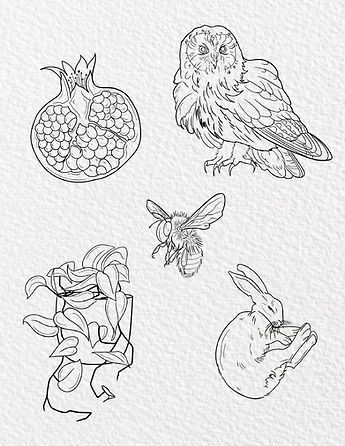
Flash tattoos (pre-drawn designs)
All our artists have their own unique flash designs available. Take a look at their profiles on IG for up-to-date options
Now, this isn’t really a style but we still wanted to add it so you know what it means. A flash tattoo is a pre-drawn design created by an artist that is ready to be selected and tattooed immediately.
Repeatable: Artists may tattoo the same flash design on multiple clients, though some artists offer "one-off" or "unique" flash that is only tattooed
Cost-effective: Because the design work is done ahead of time, flash tattoos are typically more affordable and faster to complete than fully custom work.
Script and Lettering
Recommended artist: All our artists have ability to help you with this work, Clean linework is the most important part.
Script tattoos let tattoo artists turn words and names into works of art.
There are as many tattoo lettering styles as there are fonts on a computer, so tattoo artists have a lot of freedom when it comes to creating custom pieces for their clients.
And while creating that lettering is pretty straightforward, most artists will add some sort of filigree around cursive lettering.
Rules for script tattoos:
Keep your lines clean. We recommend using long-tapered needles for script. They take a little longer to put ink into the skin, but the extra precision is worth the time, especially on hard-to-tattoo areas like the ribs.
Have someone else read the tattoo first. Sometimes, certain fonts can make one word look like another.
Make sure the letters are spaced apart enough. The ink will spread a little over time. If the letters are too small or too close together, it’ll be impossible to read and look like a black blur.
If the script is in a different language, try to get a native speaker to check it for accurate translation.

Tribal
Recommended artist: Justin, Lonier
Traditional Indigenous Tattoos
Cultural meaning: Historically used by Indigenous groups—such as the Māori (Ta Moko) in New Zealand, Polynesian, Celtic, Dayak (Borneo), and Native American tribes—these tattoos signified social status, lineage, rites of passage, and spiritual protection.
Storytelling: Each traditional symbol and placement on the body told a specific story about the wearer's heritage and achievements within their community.
Modern Western "Tribal" Style 1980s and 90s trend:
Starting in the late 1980s, Western tattoo artists drew loose inspiration from indigenous Pacific and Borneo art to create a new, abstract graphic style.
Aesthetics: This style uses solid black fills, sharp points, and negative space to create armbands, abstract patterns, or back pieces without carrying actual cultural symbolism.

Cybersigilism
Recommended artist: Justin, Lonier
A modern blackwork tattoo and design aesthetic that fuses ancient occult sigils with futuristic, tech-inspired cyberpunk linework.
Key Characteristics
Sharp Linework: Features thin, precise, solid black lines with sharp spikes, curls, and web-like or circuit-like geometries.
Body Flow: Designs are built to wrap around human anatomy, commonly appearing on the forearms, spine, hands, and sternum.
Symbolic Duality: Combines the idea of magical intent (sigils) with digital code (cyber) to create abstract, armor-like patterns.
Origins and Culture
Roots: The style evolved in the late 2010s from Berlin and Los Angeles underground techno and rave scenes, drawing inspiration from 1990s/2000s video games, neo-tribal body art, and H.R. Giger's biomechanical designs.
